Day 4: Gargia to Kautokeino | 82km
6 AM. The rain had stopped, so I decided it was time to get moving and descend the mountain as quickly as possible. Inside the tent, I pulled out my jar of peanut butter and the package of tortilla bread, breakfast of champions. I thought I’d had enough sleep to at least get myself off the mountain, assuming it couldn’t be worse than the day before.
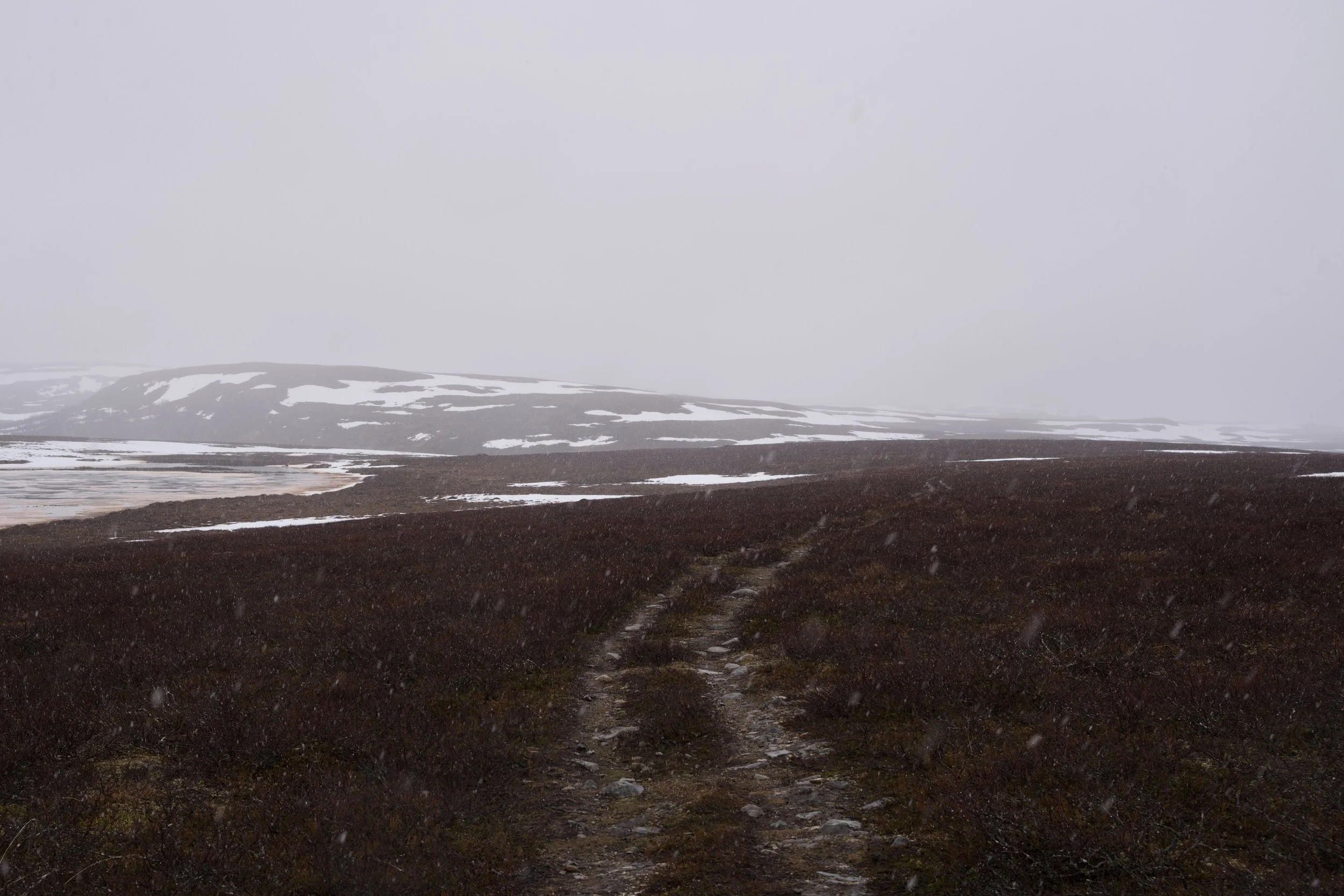
But after slowly forcing down my half-broken, half-soggy tortillas, I leaned back and passed out. There was nothing I could do to escape sleep. I awoke two hours later to heavy snowflakes drifting down from the grey sky, the wind howling through the cracks in the outer tent. I cursed myself for not leaving when I first woke up, though I told myself the extra sleep might do me good.
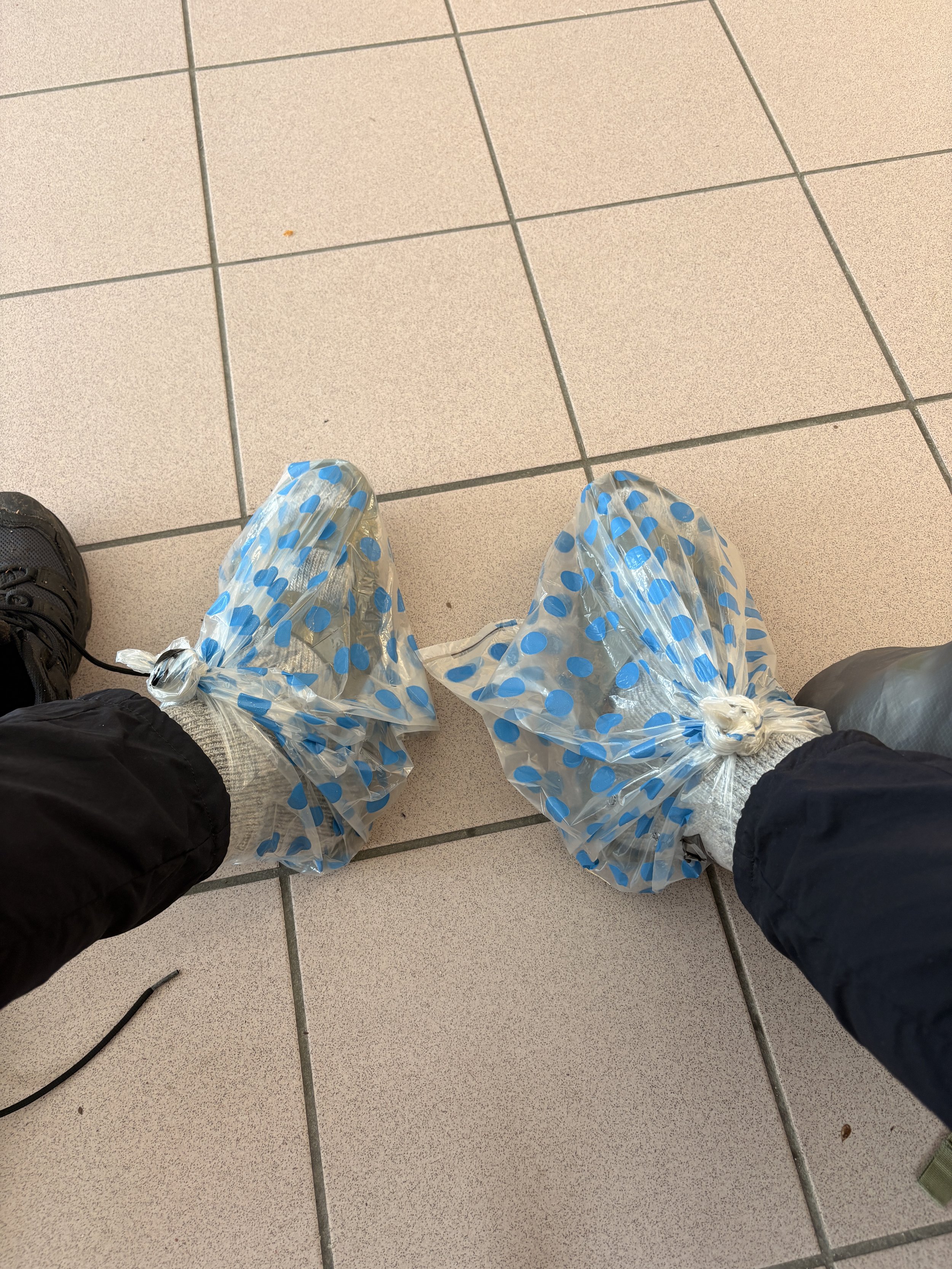
I packed up as quickly as my stiff, cold fingers allowed, cramming everything into my bags and setting off, determined to reach lower altitude where the snow might ease. My shoes were still soaked, so I improvised: a dry pair of merino wool socks, my plastic Birkenstocks, and my rain shoe covers. It didn’t take long for the makeshift setup to soak through, but the Birkenstocks at least let me kick out the snow faster than my shoes would have. I thanked whatever force was listening (even if I’m not religious) for merino wool. Without it, I was convinced my feet would’ve frozen solid. Wet or dry, merino wool keeps your feet warm. I’m not one to promote expensive gear, but trust me, merino wool socks and baselayers might just save your life.
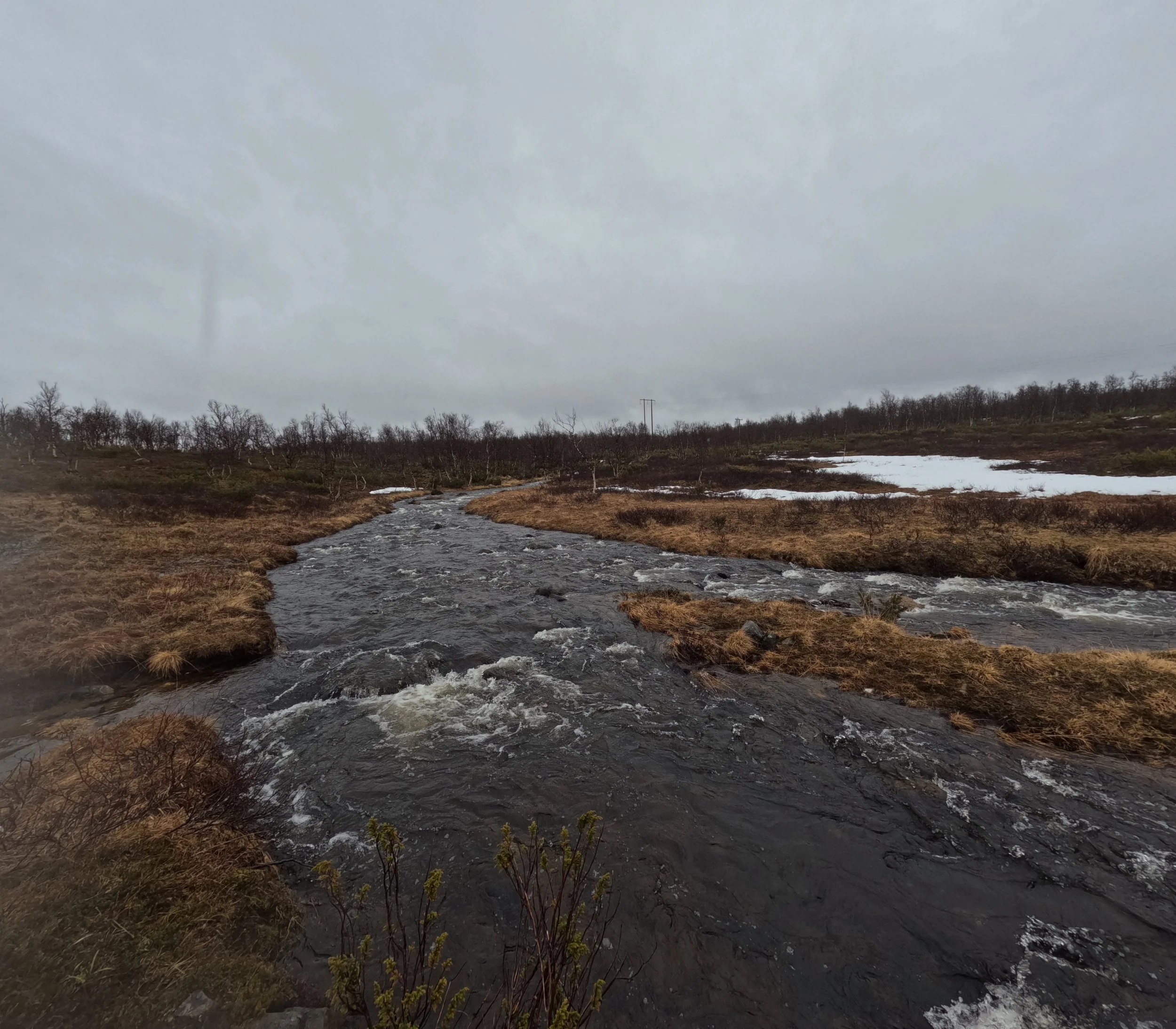
I pushed my bike forward until I hit a small river. That’s when I cursed myself again, cursed nature, and cursed whoever mapped the EuroVelo 7, the so-called "Sun Route," which was not really living up to its name. With the snow melting, every tiny stream on the mountain had turned into a fast-flowing river. There was no way around it. I accepted my fate: the only way out was through.
I stripped off my lower half, carried all my bags across the icy water, then hoisted the bike onto my shoulders to get it across. I’d repeat this process three more times before finally escaping the mountain. During the last crossing, I accidentally dropped my camera tripod. Helpless, I watched it vanish downstream, carried away to who knows where.
After the final river, I trudged across a swampy field, my feet now numb from the icy water and mud. Yet, as if possessed, I didn’t stop. It’s hard to explain, but it felt like I was fighting for survival, and that thought alone pushed me forward.
Just before reaching the main road, one last obstacle stood in my way: a muddy marshland. I stepped carefully at first, testing the depth, but grew bolder as the ground held, until it didn’t. One step forward, and my leg sank halfway up my thigh into the muck. I clenched my toes to keep my Birkenstock from slipping off, now a lifeline, and held the bike upright to avoid losing anything else. After a short but intense struggle, I pulled my foot free, only to realize I’d left the slipper behind. I had to go back for it; my toes alone weren’t cutting it.
When I finally reached the main road, I sighed with relief and exhaustion. It felt as if every mental and physical challenge I’d ever faced had been leading up to that mountain. Suddenly, I was grateful for all those early morning runs, grueling gym sessions, and years of staying active. Without them, I’m not sure how I would’ve fared against Mother Nature, everyone’s greatest enemy and ally.
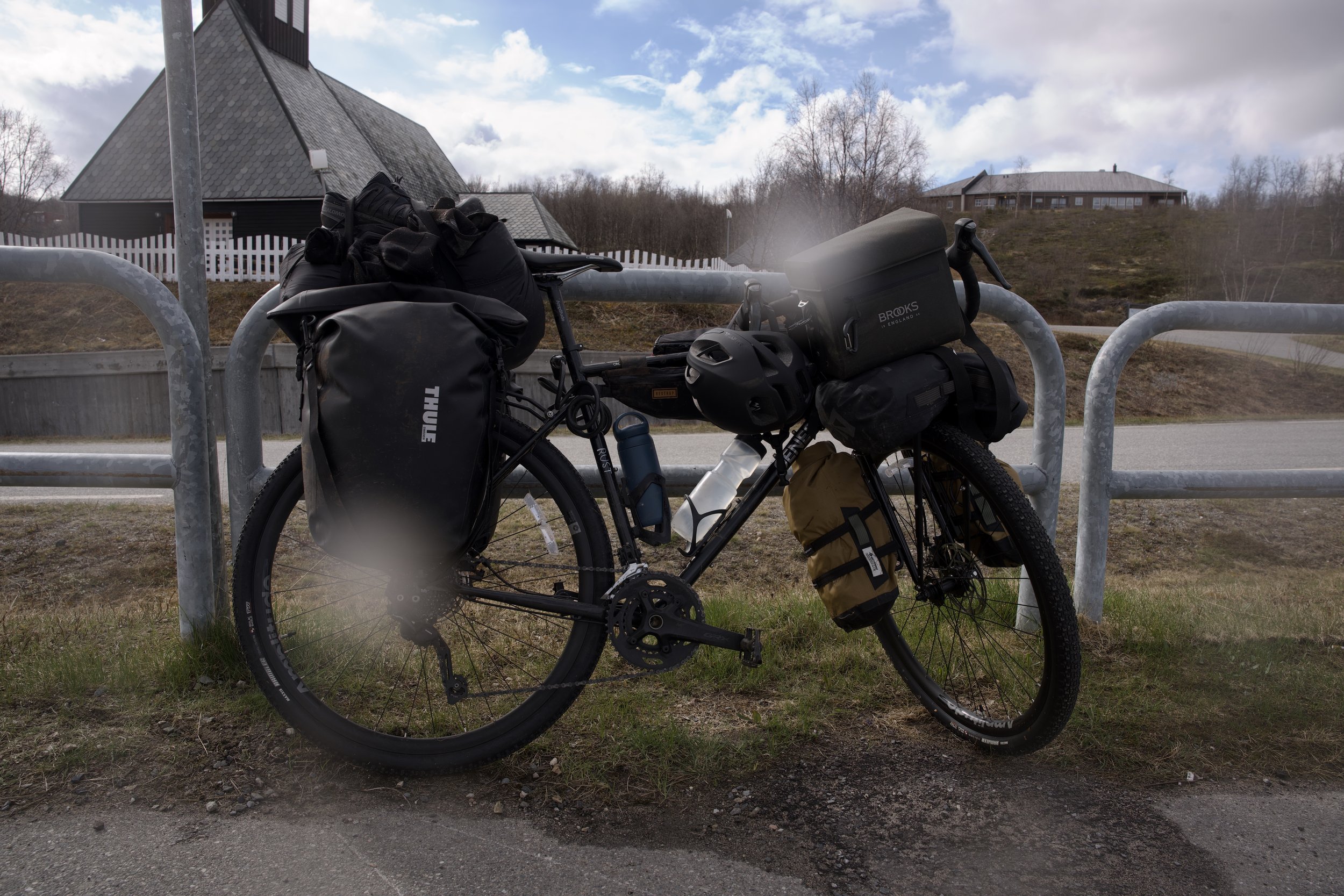
I stripped off all my clothes without a second thought for passing cars. I had to get dry. Luckily, no one came by, and for the first time in nearly 24 hours, I was able to mount my bike and pedal toward the nearest cafe, 10 kilometers away. Fueled by adrenaline and the relief of making it out unscathed, I sat down to warm up. They sold wool socks, so I bought a dry pair.
I weighed my options, but there weren’t many. After a couple of hours, I accepted that the only thing to do was to bike to the next town, get a hotel room, and dry everything out. I put on the dry socks, strapped on my beloved Birkenstocks, covered them with two trash bags for wind protection, and pedaled another 60km to the hotel. Where I found the strength, I still don’t know, but my mind proved stronger than my body, urging me to keep going.
When I arrived at the hotel three hours later, I headed straight for the shower. The warm water revealed the wounds on my legs, scrapes I hadn’t noticed beneath the layers of mud. I hadn’t felt them on the mountain, but the adrenaline, or maybe just the sheer focus on survival, had numbed the pain. The low-growing plants and trees in the moorland had torn up my shins. The cuts weren’t deep, but they stung as the water washed away the grime. My shoulders were also bruised from hoisting the bike across the rivers, but in comparison it wasn’t much to complain about.
The night before, I’d thought the hardest physical effort of my life was behind me. But even that ordeal paled in comparison to the final 10 kilometers to the main road, a stretch that had taken me nearly five hours to hike.
I hope my experience serves as a cautionary tale for anyone heading into the wilderness. Check the route, study the latest satellite images, be prepared, and don’t be stupid. At any moment, I could’ve slipped, hurt myself, and turned an already dangerous situation into a life-threatening one. It’ll probably take a few days to shake this off, but I hope I’ll find the joy in bikepacking again.